



Yes, nonsurgical treatment can reduce pressure and irritation, though it does not reverse age-related disc changes. At Michigan Spine & Pain, we prioritize improving comfort and everyday mobility before a patient resorts to surgery.
Degenerative Disc Treatment in West Bloomfield
Take Pressure
Off Worn Spinal Discs
Locations Offered
West Bloomfield / Mt. Pleasant
Approach
Nonsurgical / Interventional
Downtime
Varies by treatment
Initial Results
Varies by treatment
When Degenerative Discs Affect Daily Movement
Spinal discs lose moisture and flexibility over time. These changes do not always cause life-altering discomfort, but they do make the back feel stiff as nearby nerves or joints absorb more pressure.
At Michigan Spine & Pain, our degenerative disc treatment in West Bloomfield begins with a thorough evaluation. We compare any available imaging with details about how discomfort behaves during sitting or bending, then determine the driving source of the problem to tailor our recommendations to your body’s needs.

How We Treat Degenerative Discs
Find Your
Treatment Match

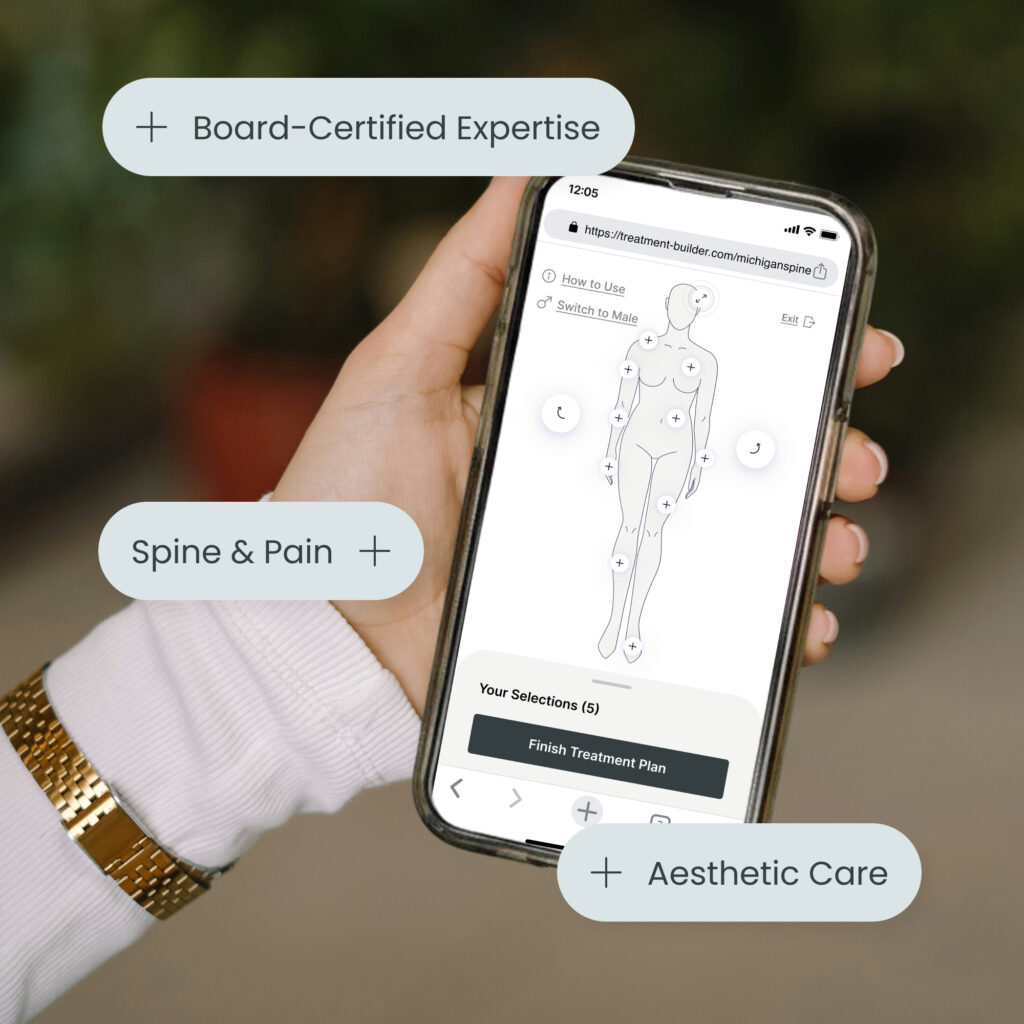
Every person experiences pain differently. Share your symptoms through our Treatment Planning Tool and receive a personalized treatment plan from our experts.

Our Most Common Recommendations
1
Step 1: Relieve Pressure First
At Michigan Spine & Pain, we often begin degenerative disc treatment in West Bloomfield by reducing pressure around the affected disc and nearby nerves. Lowering that mechanical strain can minimize irritation and make daily movement feel less painful or restricted.

2
Step 2: Treat What Keeps Pain Active
One service may not address every part of the problem. Spinal decompression targets disc-related pressure, while an injection or radiofrequency ablation addresses nerve inflammation or facet-joint pain. We only combine services when each one has a clear role in your treatment strategy.

3
Step 3: Maintain Progress
Degenerative disc care usually requires a series of treatments. Decompression commonly follows a 20- to 40-session plan, while other care options follow their own unique schedules. We track movement comfort and adjust care when progress slows or symptoms change.
Frequently Asked Questions About Degenerative Disc Treatment
Many treatment plans that include nonsurgical spinal decompression involve 20 to 40 sessions. During your treatment series, your specialist tracks how your symptoms respond, and we may alter your plan if progress plateaus.
If facet-joint pain contributes to your symptoms, your physician might suggest pairing radiofrequency ablation. This nerve care option helps especially if standing or bending backward makes discomfort worse.
Connect With Us
Your questions matter. Let’s answer them together.
Reach out with questions or use our treatment building tool to share what you’re experiencing. We’ll help you find the next steps that make sense for your life.