
If pain returns after blocks wear off, RFA often becomes the next logical step. After 2 successful visits, your doctor confirms the exact nerve involved before moving forward with radiofrequency ablation in West Bloomfield at Michigan Spine & Pain.

Radiofrequency Ablation in West Bloomfield & Mt. Pleasant, MI
For Pain That Persists
Procedure Length
30 to 90 Minutes
Anesthetic Type
Local
Downtime
Varies
Initial Results
Varies
Reducing Nerve Signal Strength
Real people. Real pain relief. At Michigan Spine & Pain, we find the source of your pain, helping you heal with the full spectrum of modern pain treatments, and get you back to the life you’ve worked hard to maintain.
If earlier treatments helped but didn’t hold, radiofrequency ablation (RFA) offers a way to extend that relief. Your provider uses RF ablation to reduce how strongly certain nerves send pain signals, creating a longer, steadier window of comfort.

What Radio Frequency Ablation Treats
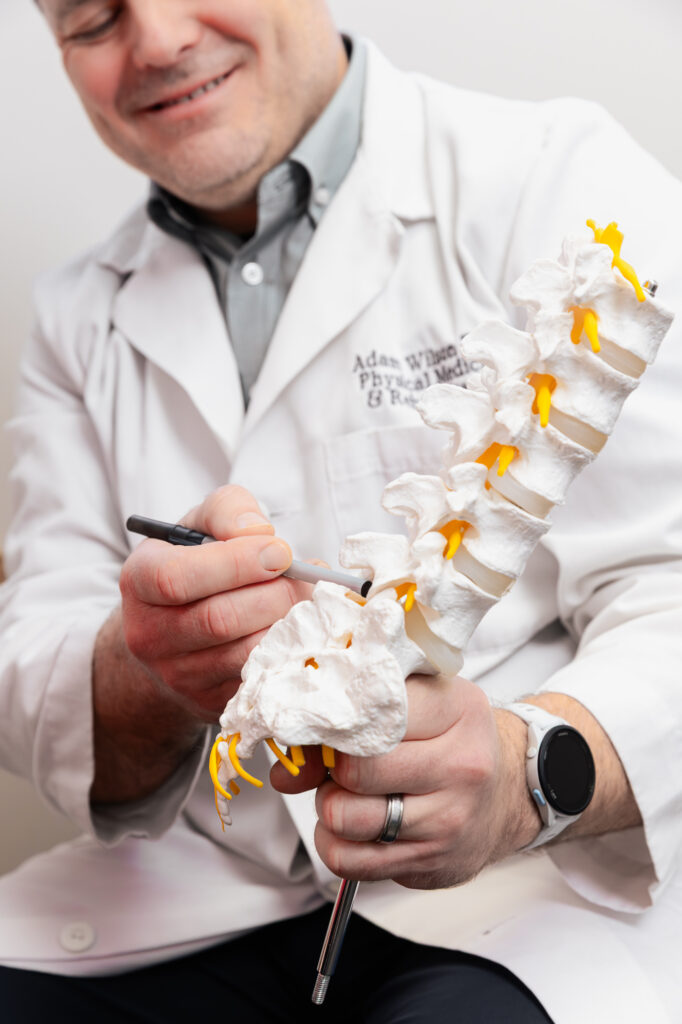
For patients 16 and older, radiofrequency ablation targets pain signals from irritated facet joints in the neck, mid-back, or low back.
Common concerns RFA can address:
-
Facet syndrome
-
Low back pain
-
Neck pain
-
Mid-back pain
-
Pain with standing
-
Pain with bending backward

3 Steps to Provide Relief

1
Confirming the Source of Pain
Your provider reviews how your pain changed after diagnostic nerve blocks. When 2 visits clearly reduce symptoms, the team confirms the exact nerve responsible for your pain before moving forward.

2
Reducing the Nerve’s Signal
The clinician numbs the area with lidocaine, then applies controlled radiofrequency energy to the nerve’s outer covering. This lowers how strongly pain signals travel without damaging the nerve itself.

3
Letting the Area Heal
You may feel temporary soreness or warmth, similar to a mild sunburn. As the tissue settles, many patients notice gradual improvement over days to weeks as pain signals stay quieter.
Discover Your
Treatment Options

Let us know what’s painful and what matters most to you. We’ll take a closer look and reach out with a thoughtful starting point for your care.

Frequently Asked Questions
RFA does not damage the nerve itself. During treatment, your provider treats the nerve’s outer covering to reduce signal strength, while leaving the nerve body intact. This allows sensation and function to remain while pain signals quiet down as a result of getting radiofrequency ablation in West Bloomfield.
RF ablation does not replace every treatment, but it can reduce the need for frequent short-term procedures. For some patients, getting radiofrequency ablation in West Bloomfield at MSP helps delay or avoid more invasive options when facet-related pain responds well.
Why We Recommend RF Ablation
Longer Windows of Relief
Radiofrequency ablation can reduce facet-related pain for 6 months to 2 years, depending on how the nerve’s outer covering gradually regrows.
Fewer Repeat Diagnostic Visits
After nerve blocks confirm the source, radiofrequency ablation often replaces frequent short-term testing with a treatment designed for more sustained relief.
More Predictable Daily Movement
As pain signals quiet down, many patients find standing, walking, and comfortable movement easier to maintain with fewer unexpected flare-ups.


Connect With Us
Your questions matter. Let’s answer them together.
Reach out with questions or use our treatment building tool to share what you’re experiencing. We’ll help you find the next steps that make sense for your life.